
Section 8 of 12
Housing
Finding a place in a tough market, where to look, what to check and what to do after you sign.
Finding an apartment in San Francisco is genuinely hard, so give yourself a head start and don't get discouraged. Landlords mostly want to be sure you can pay.
Finding a place
- It is extremely difficult to find an apartment, so start early.
- No credit score yet? Provide proof of monthly income, or ask your bank at home for a statement showing your savings. Landlords mainly want to know you can pay.
- If you are struggling to get selected, offer to pay a couple of months upfront.
- Arthur, a fellow Belgian, made a helpful site: apartmenthunter3000.com.
- Useful sites: Zillow, apartments.com and Craigslist. Watch out for scams. You can also ask in WhatsApp or Facebook groups about taking over someone's lease.
- Prices are rising fast.
| Neighborhood | 1 bedroom | 2 bedroom |
|---|---|---|
| Mission Bay | $4,000 to $4,500 | $5,500 to $6,500 |
| Marina | $4,200 to $4,700 | $6,000 to $6,800 |
| North Beach | $4,000 to $4,300 | around $5,400 |
| Hayes Valley | $4,000 to $4,300 | $5,300 to $5,700 |
| Citywide average | around $3,800 | around $4,970 |
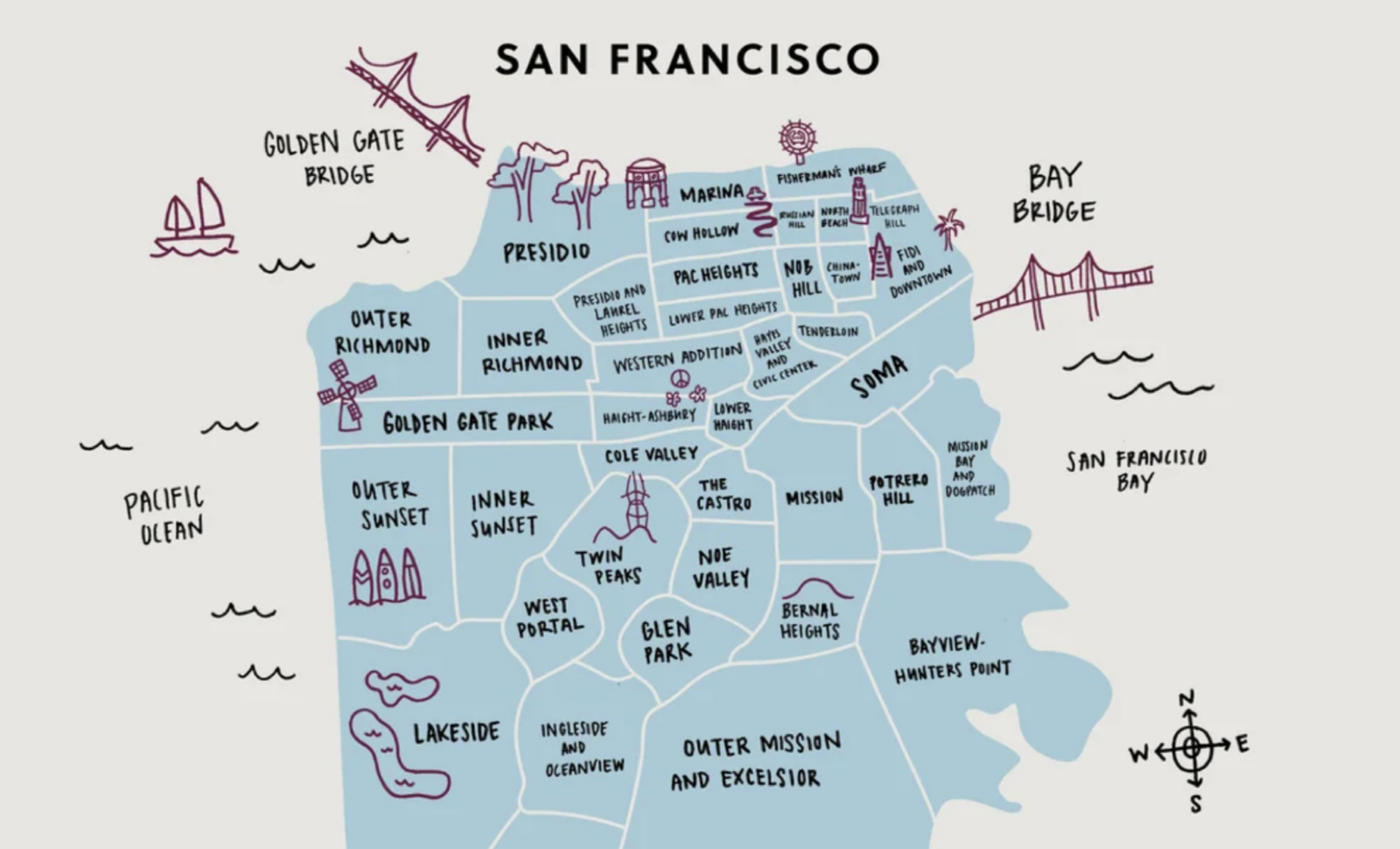
Neighborhoods and areas to avoid
- Tenderloin.
- Market Street (from 5th to 9th).
- The BART station surroundings at Civic Center and 16th Street Mission.
Conditions are extremely block by block in SF. A street can change character within a single block, so the real advice is to walk the exact address at different times of day, including after dark, before signing a lease.
What to check when visiting an apartment
- Heat. The sun is strong and many places have no air conditioning. You often don't need AC, but a unit with lots of windows can get very hot.
- Noise from cars and highways. Landlords sometimes add water fountains or fake bird sounds to mask this during a viewing, so listen carefully.
- Trash collection. It is often scheduled per area, once a week on each side of the street and it can be loud if you have single pane windows.
- The Muni tram. It can be very loud if you live close to it, especially where it rings at busy crossroads.
After you sign
- Utilities: PG&E handles gas and electricity.
- Home internet: common options are Xfinity and AT&T, with Sonic a popular local provider.
- Renters insurance: landlords often require it and it is cheap. A popular one: https://www.lemonade.com/